
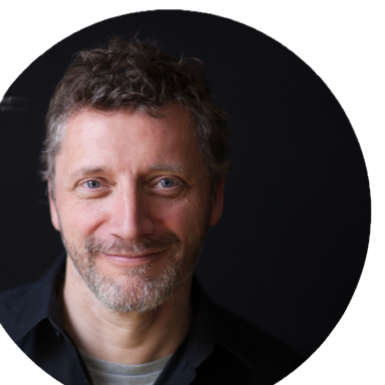
As a Perspectivist, I support organisations going through periods of uncertainty, transition or transformation.For over twenty years, my career has combined strategy, communication, change management, design thinking, group dynamics and systems thinking. I have worked with private, public, semi-public and non-profit organisations, in contexts of repositioning, internal transformation, cultural evolution or strategic clarification.I listen, identify patterns, and bring useful tensions to the surface, to transform this understanding into decisions, narratives, frameworks for action or concrete support or intervention measures.I have held senior roles in international marketing at Caterpillar and Toyota, developed my own consultancy business with The Fool On The Hill, led strategy at Minale Design Strategy, co-founded the systemic collective Socks & the City, and supported the transformation of Noshaq. I now work as a consultant and trainer, notably at CFIP.My approach is systemic, empirical and human-centred. I help organisations to gain a clearer understanding of themselves — and then to translate that clarity into action.I’d be delighted to discuss this further with you.Douglas
When to call me
Most organisations don’t ask for help by immediately identifying the real problem. No, they call because something has gone wrong. Communication has broken down. The structure no longer makes sense. Teams are losing sight of the bigger picture. Management senses a drift, a shift, without being able to put their finger on it. Change seems necessary, but where to start remains unclear. These situations may seem very different on the surface. They often have something in common: the organisation has become a little harder to understand — for others, and sometimes for itself.
This is where I come in.
① When communication has become too complex, too vague — or too bland
Sometimes an organisation has so much to say that it says too much at once. Sometimes it has simplified its message so much that what remains seems generic, impersonal, or utterly forgettable.
In both cases, the problem isn’t always the communication itself. It may be that the organisation is no longer entirely clear on what it stands for, how it creates value, or what makes its voice distinctive.
This is often a good time to take a step back — and clarify what really needs to be said before producing any more messages.
② When the organisation has become more complex than its history
Growth, change, new layers, new teams, shifting priorities: over time, many organisations become harder to understand.
Roles overlap. Visibility diminishes. Friction, duplication, or ‘gaps in the system’ start to build up. The structure no longer clearly reflects its mission.
This isn’t always a failure in itself. Often, it simply means that the organisation has evolved faster than its own understanding of itself. It’s usually the right time to pause, make sense of what has emerged, and start afresh from there.
③ When teams no longer really know what they’re doing together
An interpersonal issue is not always a conflict in the dramatic sense of the word.
Sometimes, even though they are fully committed, teams lose sight of the link between their tasks and the ‘big picture’. Their view of the bigger picture becomes blurred. As they become more fragmented and under greater pressure, their communication remains functional but loses its meaning.
At such times, what is needed is not necessarily ‘team-building’ in the strict sense. It may be a matter of rediscovering a shared purpose, linking roles to the mission, and making the collective vision visible once again.
④ When management senses that ‘something is amiss’ but doesn't know why
Things seem less coherent than before. It’s harder to get everyone on the same page. Certain tensions are resurfacing. The message is less clear. Energy is being wasted somewhere, but the problem remains too vague to be properly articulated.
When this happens, there is a risk of tackling the symptoms one by one without understanding what links them. This is often when listening carefully and taking a different approach to assessing the situation prove most useful.
⑤ When identity, structure and lived reality are no longer aligned
Sometimes the organisation’s external messaging seems on point, but no longer rings true internally. Sometimes it’s the other way round: the organisation possesses something rich and distinctive, but its visible identity no longer reflects it.
This disconnect can manifest itself in many ways: confusion among stakeholders, unclear positioning, internal fatigue, recruitment difficulties, or a general feeling that the organisation no longer truly embodies its own history.
This is often a sign that work on identity is needed — not for the sake of image, but for the sake of coherence.
⑥ When a human problem may not be just a human problem
Sometimes a team or management committee focuses on a particular person, a point of tension, or a difficult relationship (of course, individual dynamics do exist and are important).
But what sometimes appears to be a local problem also reveals something broader: a system that struggles to embrace diversity, to communicate under pressure, or to function amidst contrasting styles and expectations.
In such situations, simply addressing the visible friction may not be enough. The most useful question, then, might be: what does this tension tell us about how the organisation functions as a whole?
⑦ When change is necessary, but the starting point is unclear
Many organisations know they need to change — strategically, structurally, culturally — but are not yet clear on exactly what kind of transformation they really need.
There may be a sense of urgency. Goodwill, even a certain momentum. But without clarity, initiatives can easily become generic, overloaded, or disconnected from the reality on the ground within the organisation.
This is often where my work can be most helpful: by first creating a clearer understanding of the situation, so that the next step is better grounded and more relevant.
These are examples, not boxes
The situations described above are merely examples. The common thread is simpler: something important has become harder to understand, to define, to align, or to manage.
My role is to help the organisation make sense of itself — so that the resulting response is more coherent, better grounded, and more useful. Sometimes this takes the form of a clearer narrative. Sometimes it involves an organisational adjustment, a strategic clarification, or a broader intervention.In each case, the first step is the same:
“Understanding what is really going on”
How I work
I don’t start with a ready-made answer or a one-size-fits-all solution. I begin by helping to understand what is really going on, so that the solution is tailored to the organisation’s specific circumstances rather than to a preconceived method. Tailored to the context, the process generally follows five steps.
| ① Listen ↓ | Through conversations, interviews, targeted observations and existing documents, I seek to understand how the organisation perceives itself, how people experience it, and where tensions or confusion begin to arise. |
| ② Identify ↓ | I look for recurring patterns, contradictions, weak signals, blind spots, and the gap between the organisation’s stated identity and the reality of its day-to-day operations. |
| ③ Clarify ↓ | I translate this analysis into a clearer picture: what the organisation is really trying to achieve, what has become blurred or diluted, and what is truly at stake. |
| ④ Design ↓ | Building on this clarity, I help to formulate the right response — whether strategic, relational, structural, communicational or cultural. |
| ⑤ Implement | I help translate this response into action. If necessary, with trusted partners. This is not a rigid formula. What remains constant is the logic: listening carefully, understanding what is really happening, clarifying what matters most, and building the response. |
What you can expect
This approach is particularly useful when a situation is still too unclear to be resolved properly.
It helps to avoid two common pitfalls: acting too quickly without sufficient clarity, or spending too long deliberating without making any progress.
The aim is to achieve both:
a more accurate understanding of the organisation;
and a more relevant basis for action.
What this can lead to
This approach does not always lead to the same kind of outcome; and that is deliberate: I do not start with a fixed model and try to force every organisation to fit into it. I start with the situation itself: what has become unclear, what needs to be better understood, and what kind of response would be truly useful. Sometimes the result is a clearer understanding of the organisation and a strong recommendation. Sometimes it leads to broader work on positioning, structure, alignment, communication, culture or change. The form varies. The objective remains the same.
→ A clearer picture of what is really going on
Sometimes this is the most valuable outcome in itself — a clearer understanding of the organisation: which patterns recur, where the confusion really lies, and which tensions are structural rather than personal.
This can lead to a diagnosis through listening, a ‘status’ report on organisational clarity, a summary of patterns and contradictions, or a key recommendation that helps to reorganise the whole.
In some situations, this is enough to change the quality of the conversation.
→ A clearer identity, positioning or narrative
Sometimes it is not just the organisation’s operations that have become unclear, but the way it understands and expresses itself. Its history may have become too broad, too technical, too vague — or simply less true to reality than it once was.This can lead to:
clarification of the organisation’s positioning
refinement of the mission or narrative
a clearer articulation of what the organisation stands for
a charter, a manifesto, or an identity platform
a simpler and clearer way of expressing its direction.
This isn’t branding in the superficial sense. It’s work on identity aimed at making the organisation more coherent and easier to understand — both for itself and for others.
→ Better alignment between the organisation’s mission, organisational structure and teams
Sometimes the real need lies less in communication than in alignment. Engaged teams are working without a sufficiently shared vision. Roles may have become blurred. The structure may no longer support the mission as clearly as it should.
This may lead to leadership alignment work, meaning-making sessions for teams, a clarification of roles or the mission, or facilitated conversations around drift, growth or internal inconsistency.
The aim is not artificial harmony. It is to make the organisation more functional, more transparent and more internally consistent.
→ A more solid foundation for change
Many organisations realise that something needs to change before they know exactly what kind of change they actually need. If the assessment is too superficial, the change tends to become generic, overloaded, or disconnected from reality.
This can lead to:
a clearer framework for the changes ahead
the identification of the key entry points
a phased approach to intervention
guidance on what needs to be addressed first, later, or not at all.
Not change for change’s sake — but change rooted in a better understanding of the organisation.
The right answer is also the right team.
Not every situation should be tackled by a single discipline. Once the real issue becomes clearer, the right combination of skills often becomes clearer too.
Where necessary, we collaborate with trusted partners in areas such as branding, coaching, organisational development, communication, culture, leadership, structure and transformation support.
“Yes — that’s what’s really happening, and that’s what we need to do now.”
About
My work lies at the intersection of strategy, communication, systems thinking and human dynamics. Over the years, I have worked in branding, teaching, facilitation and organisational development, in contexts involving change and strategic support.
On paper, these paths may seem different. Yet they follow the same pattern: helping people and organisations to understand more clearly what is really happening, what matters most, and what kind of response makes sense. I am drawn to situations where things have become unclear, overloaded, misaligned, or harder to pin down than they appear at first glance. It is often here that communication, identity, structure and human dynamics begin to reveal the same problem from different angles. This is my sweet spot.
A hybrid approach, with a consistent thread running through it
I have never felt comfortable working within a single, narrow box.
My career has encompassed strategic thinking, communication, creativity, facilitation, and a long-standing interest in how people and their systems function. But there is another layer to this journey that does not always feature in a consultant’s profile. As an author, photographer, storyteller and traveller, I have spent years closely observing how ideas connect, how people contradict one another, and how systems reveal themselves at the margins.
This may even be the source of my way of working. The photographer’s habit of standing slightly to one side, to see what others might not have noticed. The author’s ear for what is said in silence. The traveller’s curiosity, open to other perspectives. The systemic thinker’s instinct to look for the pattern before naming the problem.
These things are not separate from my consultancy work. In fact, they are what make it different.
Experience▶ I started out in international industrial settings, at Caterpillar and then Toyota, working in European marketing, multicultural coordination, team management and training.▶ I then set up my own consultancy, The Fool On The Hill, focusing on strategy, positioning, communication, customer experience and organisational support.▶ With Socks & the City, a collective of systemic practitioners, I worked with public, voluntary and social organisations on issues relating to collective dynamics, communication and transformation.▶ At Minale Design Strategy, I led the strategy and application of design thinking to projects involving customer experience, repositioning and mission clarification.▶ At Noshaq, I supported a multi-year transformation plan, at the interface between strategy, organisation, ESG, communication, HR and governance, within a complex public-private environment.▶ I now continue this work through my consultancy assignments, my work as a trainer/consultant, notably at CFIP, and through entrepreneurial or community projects such as don8.be, a micro-philanthropy platform.
How I enjoy working
I am not a consultant who starts with THE method.
I don’t begin by imposing a framework and trying to force the situation to fit into it. I start by listening carefully, studying the diagrams, and trying to understand what the organisation is expressing through its language, its tensions, its habits, its structure and its blind spots.
I value clarity, depth and practical usefulness. What interests me is what can genuinely help an organisation become more coherent — not just more ‘polished’.
Why this matters to me
Many organisations do not suffer from a lack of intelligence or goodwill.
They suffer from drifting off course, overload, dilution, misalignment and a lack of clarity. When this happens, energy is wasted. Communication becomes less authentic. Change becomes harder to drive forward.
Helping organisations rediscover a clearer sense of who they are is not, for me, a cosmetic exercise. It is often a prerequisite for better decisions, stronger collaboration, more meaningful communication, more firmly rooted change and rock-solid ‘future-proof’ness.
Solo or as a team?
Some situations call for a targeted approach and can be addressed directly. Others require a broader range of skills: branding, coaching, organisational development, communication, culture, structure or transformation support.
In such cases, I work alongside trusted partners whose expertise complements my own — less as an extension of capacity than as a way of ensuring that the response is tailored to the organisation rather than constrained by the limits of a single discipline.
What I bring
“I help organisations to understand themselves better.”
This might involve clarifying what an organisation stands for, defining a framework that has remained vague for too long, helping a team reconnect with the bigger picture, or identifying the real issue underlying the formal request.
It might also involve approaching this work from a perspective—sometimes a more creative one—that most consultants would never think to try.
A bespoke framework, rather than yet another iteration of the existing one
Public Investment Fund
| What was required | To develop an ESG framework tailored to the organisation and its portfolio. |
| What was really happening | The regulatory environment was changing rapidly. Existing frameworks on the market were either too generic, too geared towards large corporations, or too focused on compliance rather than substance. Adopting one would have produced something defensible but divorced from the organisation’s reality — a public fund with over 400 investments, mainly SMEs, and a specific regional mandate. |
| What I did | Built a framework from scratch: starting with the organisation’s mission, the reality of its portfolio, and the expectations of the stakeholders it actually faced. The result was a set of KPIs, a reporting framework and a roll-out roadmap that were both compliant with regulatory requirements and consistent with the organisation, all geared towards “action here and now”, rather than an abstract duty of compliance. |
| What changed | The organisation ended up with an ESG framework it could truly embrace — one that reflected what it was, rather than what a standard model assumed it ought to be. The creative act here was analytical: rejecting the shortcut, and building something that truly corresponded to a specific reality. |
A structural demand that was, in reality, a matter of collective alignment
Autorité publique locale
| What was requested | Support with the redesign of the organisational chart. |
| What was really going on | The formal issue was structural, but the underlying difficulty was relational and political. The management team was not sufficiently aligned around a shared way of working or a common understanding of what the structure was supposed to serve. |
| What I did | Rather than treating the organisational chart as a purely technical exercise, I used it as a lever to bring out the underlying dynamics, clarify what was missing, and reframe the problem around collective functioning. |
| What changed | The conversation moved away from individual positions towards a clearer shared understanding of the mission, the structure and decision-making. The structural issue became a lever for greater alignment. |
A strategic mission that was, in reality, a question of sustainability,
focus and organisational structure
NGO working in the field of migration
| What was requested | Support with strategic clarification and empowering management. |
| What was really happening | Policy changes had undermined recurring funding, cash flow was under pressure, governance was fragile, and decision-making had become hesitant. What appeared to be a strategic problem was in fact a broader issue of sustainability, prioritisation and organisational structure. |
| What I did | I helped to untangle the situation, set priorities, explore scenarios, and design a roadmap for reorganisation that took into account the organisation’s financial reality, its mission, and its people-focused priorities. |
| What changed | A leaner, more focused and more sustainable structure emerged — an organisation that remained people-centred, whilst helping to preserve the organisation’s mission under pressure. |
When the best rebranding is still the existing branding
Union
| What was asked for | To lead a rebranding process for an identity perceived as outdated. |
| What was really going on | The identity did indeed need refreshing, but the teams were still attached to it. The problem wasn’t that the brand had lost all value, but that its strengths hadn’t been clearly identified, structured and highlighted. |
| What I did | Through workshops and work on perceptions, I helped reframe the issue. Rather than replacing the brand, we identified the existing assets and built on them. |
| What changed | The organisation achieved a stronger and more consistent brand identity without losing its continuity. The resulting brand identity is still in use more than ten years later. |
A community-led initiative based on a paradigm shift
don8.be
| The starting point | Most charitable and philanthropic organisations ask people to donate money. What if people could support their favourite causes by donating an item instead? |
| The concept | don8 is a marketplace connecting people who donate items with people who buy them. The proceeds — minus a deliberately minimal and publicly stated commission — go directly to the charitable cause chosen by the donor. |
| What makes it different | The twist is the idea. The donor gives an item, not money. The buyer supports a cause without necessarily experiencing it as a donation. Generosity becomes structural rather than a conscious effort. The name says it all. |